
THE SPACES AT 40 COBOURG SHOULD BE GIVEN BACK TO THE LOWERTOWN COMMUNITY
Lowertown is Ottawa’s nerve centre, where residential and commercial buildings of all types, community services, tourist attractions and cultural and artistic offerings converge. As anyone who lives and gathers here will tell you, it’s a vibrant neighbourhood! However, there’s no denying that this vibrancy goes hand in hand with an entirely different reality: the large number of people struggling with homelessness and substance abuse, and, as the Lowertown Community Association has underlined, the over-concentration of social services in the neighborhood.
We can discuss the reasons behind this over-concentration: Is it in response to the needs that are already present? Or is it the presence of these services that attracts people in need to this particular neighbourhood? Or is it a combination of both? It goes without saying that, whatever the causes, the organizations working to support and help people in need are doing a masterful job despite the constraints imposed on them.
Even so, we believe that this over-concentration of services is far from optimal. For example, while it is our opinion that more affordable and supportive housing is needed in Ottawa, we think it would be beneficial if it were better distributed across the city. Lowertown, for historical and geographic reasons, has done more than its share in this regard. We understand that as a central, urban district, Lowertown must accept a greater role than other neighbourhoods, but we believe we’ve reached the limit.
In our view, what Lowertown residents need is equitable access to recreational and community infrastructure and programs in their own neighborhood. They deserve organizations and groups whose mandate it is to provide these services that have greater physical and material capacity. It is not right that in such a densely populated equity-seeking neighbourhood, its residents don’t have priority access to existing community facilities.
The neighbourhood is more affected than ever: our food bank serves twice as many clients as it did five years ago, the Community House where it operates is no longer meeting demand and has had to cut other services it used to offer, and our indoor youth basketball and soccer programs struggle to gain reliable access to adequate space. The solution to the lack of space is, for us, obvious: the community and recreational spaces at 40 Cobourg must be returned to the Lowertown community.
The City of Ottawa has the wherewithal to make this happen. It would be for the great benefit of the residents of Lowertown. It is on their behalf that the Board of Directors of the Lowertown Community Resource Centre requests that the City take back the management of the spaces at 40 Cobourg and make them available to the residents of Lowertown.
We ardently hope that the City will make the right decision.
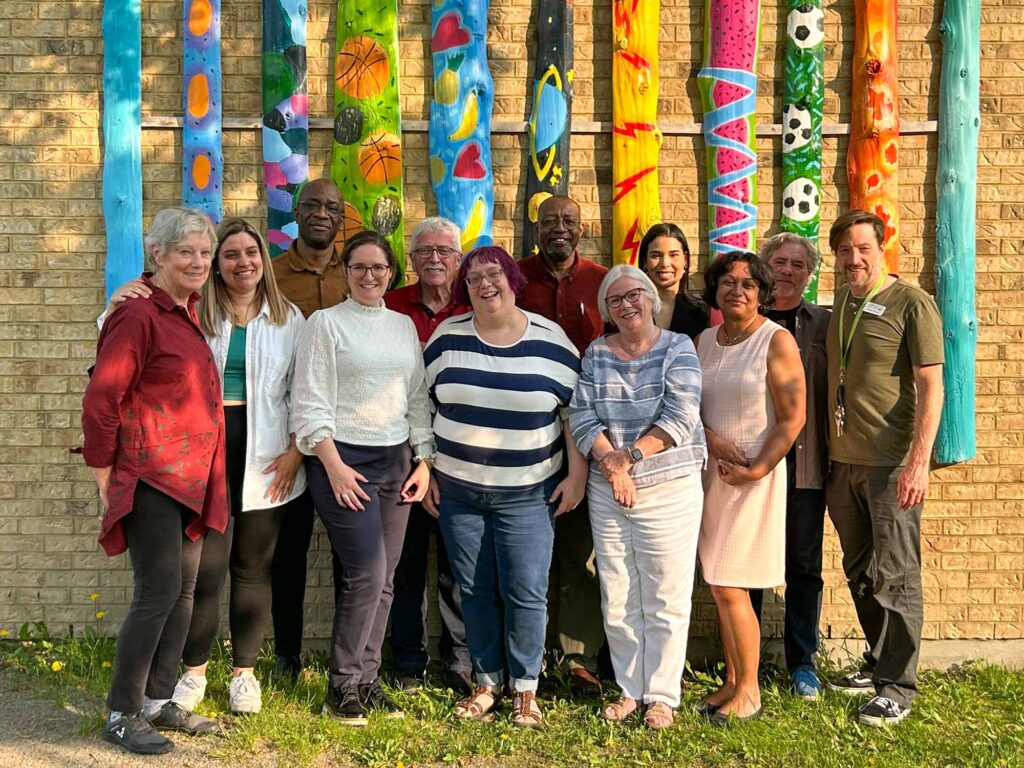
Jolane T Lauzon (Présidente), Marty Mudie (Vice-président), Désiré Kabore (Secrétaire-trésorier), Jean-Paul Gagnon Kendra Hughes, Christopher Knight, Martha Labarge, Janhabi Nandy, Herman Ntawe, Valerie Proctor, Dalia Tejeda Alix
QU’ON REPRENNE LES ESPACES AU 40 COBOURG POUR LA BASSE-VILLE
La Basse-Ville est un quartier névralgique de la ville d’Ottawa, où coexistent édifices résidentiels et commerciaux de tous types, services communautaires, espaces touristiques et offrandes culturelles et artistiques. Tous ceux qui y vivent et qui s’y rassemblent vous le diront : il s’agit d’un quartier en effervescence! Toutefois, nul ne peut nier que cette effervescence accompagne une toute autre réalité, soit le grand nombre de personnes aux prises avec des défis reliés à l’itinérance et à la toxicomanie et, comme l’Association communautaire de la Basse-Ville le souligne, il y a une surconcentration des services sociaux dans le quartier.
On peut discuter des raisons derrière cette surconcentration : Est-ce en réponse aux besoins qui y sont présents au préalable? Ou est-ce la présence de ces services qui attire les personnes dans le besoin vers ce quartier précis ? Peut-être est-ce une combinaison des deux? Il va sans dire que peu importent les causes de cette surconcentration, tous les organismes œuvrant à soutenir et à aider les personnes dans le besoin font un travail magistral malgré les contraintes qui leur sont imposées.
En dépit de tout, nous sommes d’avis que cette surconcentration de services sociaux est loin d’être optimale. Par exemple, alors que nous croyons fermement que plus de logements abordables avec soutien sont nécessaires à Ottawa, nous croyons qu’il serait bénéfique que ceux-ci soient mieux répartis à travers la ville. La Basse-Ville, pour des raisons historiques et géographiques, a fait plus que sa part de ce côté. Nous comprenons que comme quartier central et urbain, la Basse-Ville doive accepter de porter un plus grand fardeau à ce niveau, mais nous croyons que nous avons atteint la limite.
Ce dont les résidents de la Basse-Ville ont besoin, c’est d’un accès équitable à des infrastructures et à des programmes récréatifs et communautaires dans leur propre quartier. Ils méritent que les organismes et groupes qui ont comme mandat de leur fournir ces services aient une capacité physique et matérielle accrue. Il n’est pas normal que dans un quartier aussi densément peuplé et ayant des besoins aussi grands, ses résidents n’aient pas un accès prioritaire aux installations communautaires.
Le quartier est plus affecté que jamais: notre banque alimentaire dessert deux fois de clients qu’il y a cinq ans; la Maison communautaire où elle est hébergée ne fournit plus à la demande et a dû couper les autres services qu’elle offrait habituellement; et nos programmes de basketball et de soccer intérieurs pour jeunes peinent à avoir un accès fiable à des espaces adéquats. La solution au manque d’espace est évidente : les espaces communautaires et récréatifs du 40 Cobourg doivent revenir à la communauté de la Basse-Ville.
La Ville d’Ottawa aurait le pouvoir de faire en sorte que ça arrive. Au nom des résidents et résidentes du quartier, le conseil d’administration du Centre de ressources communautaires de la Basse-Ville demande que la Ville reprenne la gestion des espaces au 40 Cobourg et les mette au service des résidents du quartier. Nous espérons ardemment que la Ville prendra la bonne décision.
Jolane T Lauzon (Présidente), Marty Mudie (Vice-président), Désiré Kabore (Secrétaire-trésorier), Jean-Paul Gagnon Kendra Hughes, Christopher Knight, Martha Labarge, Janhabi Nandy, Herman Ntawe, Valerie Proctor, Dalia Tejeda Alix