
By Nadia Stuewer
Did you know that in the 1940s and 1950s, Bingham and Anglesea (now Jules-Morin) parks were buzzing centres of social activity? In winter, the skating rinks hosted enthusiastic broomball and hockey leagues and in summer, there were lacrosse and baseball teams sponsored by local businesses. Naturally, there was a fierce, but friendly, rivalry between Lowertown East and Lowertown West for many of these sports.
It wasn’t all sports. There was an oval rink surrounding the boarding rink where families and hand-holding teens skated to music. There was a speed-skating oval and Lowertown produced some provincial champions in that sport.
Today, there are no organized leagues. According to Measar Musa, who operates the rink at Bingham Rink on behalf of the Lowertown Community Association (LCA), rinks are still playing an important role in the life of our community, but more at the level of families and even that has changed since COVID. After the lockdowns and restrictions on playing hockey on the rinks, people’s routines have changed, and skating and hockey have a different place in their lives.
The institutional base that used to support all these community events has been eroded over time. The commercial base of Lowertown businesses, especially in the ByWard Market, used to be local custom. While locals still patronize local businesses, a lot of the traffic in the Market comes from all over Ottawa, especially as grocery and hardware stores have given way to more and more bars and restaurants, and the chain stores are no longer rooted in the community. Their support for community events has declined proportionately. Other institutions that supported community life such as Le Patro and La Paroisse Ste-Anne, are not oriented to the nearby neighbourhood as they were in the past.
Matt Beutel, Director of the Lowertown Community Resource Centre (LCRC), explained that Lowertown, like Canada in general, has changed a lot since the heyday of the Lowertown events. Society used to have more cohesion through membership in parishes and larger intergenerational family groups who laid down deep roots in Lowertown. Today, families are more diverse and mobile. This means, said Matt, that we have to work harder and more creatively to find ways to bring the community together.
One of the ways to bring the community together is the Lowertown celebration of Winterfest. Since 2010, Lowertown’s winter celebration has been organized by the Lowertown East Residents Committee (LERC). The event, which takes place on Family Day in Jules Morin Park used to begin with a parade through the neighbourhood.
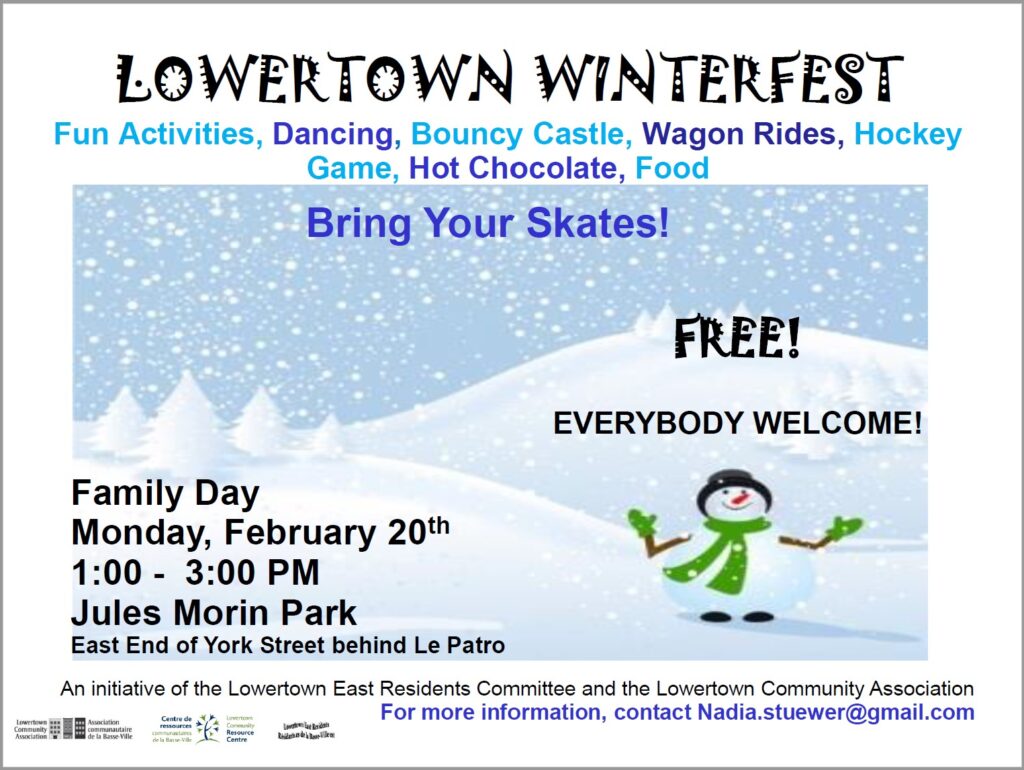
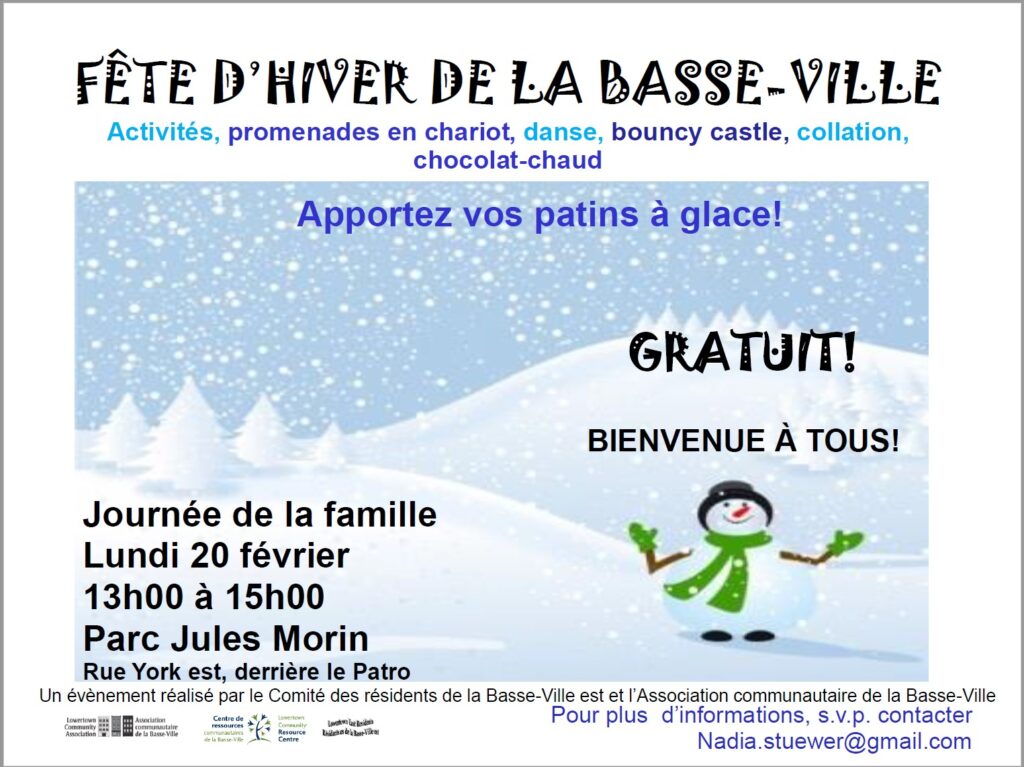
Putting on this event for the community needs two things, funding and volunteers. Getting volunteers has often posed a challenge to organizers. However, this year, organizing Winterfest has been more challenging than usual.
According to volunteer Warren Waters, the pandemic hit LERC particularly hard because its core group of volunteers is from an older generation, less agile with social media. Going virtual meant that members without computers or internet connections couldn’t participate. Warren says the best part about volunteering for LERC is meeting other residents, whether it’s doing a door-to-door survey on residents’ views on safety and security, or getting the word out about Winterfest.
Warren added that one of the largest barriers to community organizing is the new, larger apartment buildings which are “harder to access” to go door to door to deliver flyers or speak to residents. High turnover rates among renters means fewer long-term residents who make connections with their community.
As for funding for Winterfest, LERC used to receive civic events funding from the City of Ottawa. This year, the timing of the funding cycle was changed, making it impossible for LERC to receive municipal funding for the event. As a result, LERC needed to be more creative in finding other sources of funding. The LCA has contributed $1000 to support the event, but more money has had to be raised from community partners.
Even when there are institutional supports for community events, the pandemic still affects their success. Lowertown resident Sandra Pilote described the annual Beausejour/Beausoleil Christmas celebration, which is funded by Ottawa Community Housing (OCH). This year, the event was held for the first time since the pandemic. Sandra said it had the lowest turnout, in the 30 years she has been organizing it.
The event offered food catered by Chef Ric’s and gift cards for pick up at the Jules Morin field house. Despite adopting COVID-friendly measures, only about half as many people as usual came. There was so much food left over that OCH staff delivered food packets and gift cards door to door.
Sandra noted that a community BBQ held last summer had a better turnout, confirming that outdoor events fare better than indoor ones in the time of COVID. But she added that organizing such events is also more challenging since COVID; not only do tenants’ associations generally struggle to find enough volunteers, but people who don’t have computers or connectivity cannot participate in virtual meetings, while others do not feel safe attending in-person meetings.
Sylvie Bigras, President of the LCA, identified three factors that have made it more difficult to organize events in Lowertown over time. In addition to the pandemic affecting people’s incomes, social connectivity and ability to organize, events themselves were really hammered by the pandemic. “People forget about the events” after several years of their absence, and event promoters, whether volunteers or professionals, have more work to do to bring people out.
“The loss of local” is another factor. Although this doesn’t affect just the Lowertown community, the increasing presence of chains, who don’t have the same sense of community affects community building. The lack of diversity and small local businesses also means that residents are losing a sense of connection to their commercial base.
Building a sense of community remains the goal of many of the organizations in Lowertown. The LCA, LERC, LCRC and the Lowertown Echo continue the effort to connect and build community despite the many obstacles. However, it takes time, it takes people and it takes funding to create the events that make that happen.