
By John Chenier
For many months during 2020, the halls of the Rideau Centre and the streets of the Lowertown shopping district were deserted. The absence of office workers and tourists, and the reticence of local residents to leave the safety of their homes placed considerable stress on these areas as restaurants, shops, salons and spas struggled to find the means to pay their bills.
But COVID has only emphasized what had become a growing problem for some businesses in our community — the decline in patrons, especially daytime shoppers.

For much of its history, the Market was a vibrant shopping district for all during the day and mainly a hang-out for locals at night, but over the past four decades, the tide has steadily shifted. During that period, many stores that had served the nine-to-five shoppers closed and were replaced by restaurants and bars serving a noon-to-midnight crowd.
An article in the November 2019 issue of the Echo noted farmers’ concerns over the steady decline in the number of shoppers at their market stalls. Concerns over the decline of the ByWard Market area is the driving force behind the new multi-million-dollar Public Realm Plan just approved by City Council.
As we move into a post-COVID era, local businesses are concerned about if and when patrons will return. Creating an environment and experience that will attract people back to Lowertown is the main challenge for three organizations, the two BIAs — the ByWard Market Business Improvement Area (ByWard) and Downtown Rideau Business Improvement Area (DRBIA) — as well as Marchés d’Ottawa Markets (MOM).
DRBIA

Executive Director Downtown Rideau BIA
The DRBIA includes the shops in the Rideau Centre as well as all the businesses along the Rideau Street corridor. Peggy DuCharme has been its Executive Director since 1994. Ms DuCharme has seen many changes to her domain since then, including at least two major overhauls of the Rideau Centre, the construction of the LRT and the never-ending makeover of Rideau Street.
With the destruction/construction cycle and “years of dealing with dust and debris” now behind it, Ms. DuCharme affirmed that now is the time to make use of the new infrastructure.
In the aftermath of COVID, the future of downtowns has once again become a topic of global discussion or concern. Downtowns usually depend on a daily influx of office workers. Will they return, or will working remotely become the way of the future? For the businesses in the DRBIA, federal office workers and tourism represented their lifeblood. DuCharme notes that her colleagues in suburban BIAs have hardly noticed a change in their areas.
“Success in a downtown core is built on socializing and gathering,” she said. A key ingredient to success is a core that is pleasant, clean and safe. Creating the proper environment requires cooperation, which is easier to achieve when you are able to build relationships with your partners. But building those relationships is her organization’s biggest challenge.
Many members of the DRBIA are multinationals which can have a steady turnover of store management. Turnover is even more of a problem in her dealings with the City, where staff turnover is compounded by the contracting out of many services on which the DRBIA depends. Then there are silos; people know something isn’t their responsibility but are often unable to tell you whose responsibility it is. The bottom line is this: providing a clean and safe environment is a challenge when it can take months to have things replaced, repaired or rectified.
Ms. DuCharme has ideas for what the DRBIA can do to make Rideau Street a destination. She is mulling over the possibility of sponsoring a huge block party to celebrate the completion of Rideau Street. She is also looking for ways to develop a sense of community among residents in the condo towers along Rideau Street. Since many of these residents are students , she has developed a working relationship with the radio station at U Ottawa, CHUO.
The closure of the Beer Store on Rideau has stripped condo residents of a convenient place to return their bottles. She is thinking of organizing a major bottle collection with the proceeds going to a local charity.
Her most potent resource may be the 12 new FX poles along Rideau Street. These can be programmed to project all kinds of things, from light shows to videos. DuCharme is exploring the possibility of promoting local musicians by inviting them to prepare audio/video material which could be broadcast as mini concerts on these FX poles. She is also considering other uses of spaces such as Ogilvie Square or William Street Plaza for public gatherings or other events. .
“We are not in this alone,” says DuCharme. “Some of the best minds are wrapping their heads around the challenges.”
ByWard
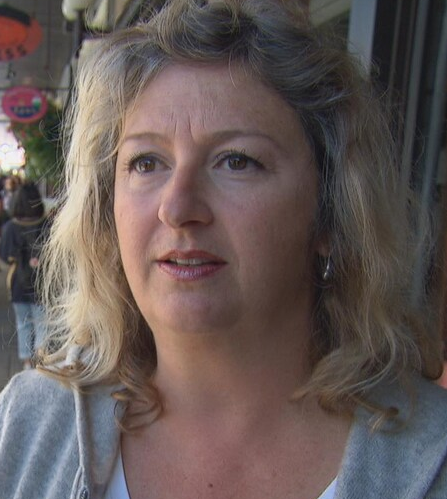
Executive Director ByWard Market BIA
Jasna Jennings has been in her post as Executive Director of the ByWard Market BIA since 2006. Much has changed over her 14 years at the helm. She said: “There was no social media when I started. Social media has changed how we communicate and organize. What you do hasn’t changed much. How you do it has.”
Her highest high was in 2017 when the Market was the scene for many of Canada’s 150th birthday celebrations. Her lowest low was the changeover from Market Management to Marchés d’Ottawa Markets. The ByWard BIA and Market Management had shared staff, space, budgets and ideas for years. The new Marchés d’Ottawa Markets’ team ended all of that along with shared programming like the summer student Market Ambassadors program. The ByWard BIA was forced to move to new offices where they felt isolated.
Happily, the relationship is on the mend under the new Executive Director at Marchés d’Ottawa Markets, Zach Dayler.
Jennings has been on a roller-coaster of stress and anxiety since the first COVID lock-down last March. “I haven’t had a good night’s sleep since,” she said. Fortunately, the ByWard BIA had launched a major Digital Main Street project months before the first lock-down. This has helped many of her businesses sell their goods on-line while their stores were closed. However, it should be pointed out that BIAs derive their revenue and raison d’être from having shops on the street in their area.
Jennings can point to some good things that came about as a result of COVID. She has more money to spend on member-sponsored events and has been able to have events such as Bark-it run for longer than they had in the past.
The ByWard BIA also ran a Holiday Box promotion where they sold 100 boxes for $100 each. They filled each box with items purchased from local businesses. Jennings said everyone profited from this. The businesses sold their goods at volume-discount prices, which benefitted the purchasers. The boxes sold out in no time. The BIA is considering a repeat in April.
There has been some bad news, like Mother Tucker’s and the Fish Market closing their doors for good. More recently the Starbuck’s Reserve, which depended on workers from government and hi-tech offices is also closing. But Farouz has opened its new restaurant, and a new coffee house, Opulence, has taken over where the Bluebird was. And the owner of Zak’s Diner, John Borsten, will be opening a new restaurant/bar where the Fish Market used to be.
The fact that there is no Winterlude this year has meant the ByWard BIA has time to work on new projects and clean up their website. The new communications person, Patrick Narcisse, is very tech savvy. As a result, there will be a new arts walk, mapping out the public art and the many galleries in Lowertown. The popular historic walking tour is also being up-dated. Both initiatives will hopefully attract people to the Market and take them further afield than before. Other plans to make the heritage aspect of the Market more interesting to visitors include more historic images on traffic boxes and possibly regular heritage days.
Like her counterpart Peggy DuCharme at DRBIA, Jennings is concerned about upgrading and maintaining cleanliness and security in the Market. This was identified as the main strategic priority by the new ByWard BIA Board, and its Safety and Security Committee hase expressed concerns about the implications of the continued expansion of social services in the community. As with the DRBIA, Jennings is frustrated by the time and effort it takes to get a street-light bulb replaced and to have it the same colour as the rest of the bulbs on the street.
Jennings is already thinking about the 200th anniversary of the Market and hopes that much of the Public Realm Plan will have been implemented by then.
MOM

Executive Director
Marchés d’Ottawa Markets
Zach Dayler is the Executive Director of Marchés d’Ottawa Markets (MOM). He started in the job last March and had only been in the position for two weeks before the COVID lock-down. He showed his resilience by stitching together an arrangement that kept a few stalls operating from June to December. Now the hard part of his job begins.
His mandate at MOM is simple, reversing the trend of the past 20 years and bringing back the glory days of the Market.
He has an idea of what it will take to succeed in his quest, and much depends on the community. In his own words: “The area has been subject to lots of experiments but little follow-through. This has led to a loss of energy in the community. There is a need to rejuvenate the spirit of the community. I will need to work with everyone to find better, more affordable solutions.”
His plan, which can be seen in more detail in his column elsewhere in this issue, is to rebuild the whole Market experience. This will take a mix of farmers, crafters and social enterprise operating on a Fair-Trade basis to provide a unique shopping experience, one worth coming to the Market for.
Dayler hasn’t deluded himself about the challenges he faces in transforming the Market and making it a welcoming, exciting place to shop.
Homelessness and drug use are a serious concern.
So too is the volatility of the Market core, with its high rents and currently low revenues. How or whether these realign have a large role to play in determining the make-up of the market.
Dayler faces a lot of competition in attracting the right sort of vendors— farmers, crafters or social enterprise — unless he can get customers to return to the Market to buy their wares.
For the 2021 spring and summer seasons, people will still likely wish to avoid crowds and use public transit only when necessary. Shoppers will need to feel comfortable and confident COVID protocols are in place.
Dayler also knows that if and when the Public Realm Plan is implemented it will mean noise, dust and upheaval for everyone. However, he says if everyone is better prepared than merely putting up a “Still Open” sign, it can be managed.
It is appropriate that for the Market it comes down to a question of: “Which comes first the chicken or the egg?” To lure consumers down to the Market we need the producers. To lure the producers, we need to ensure they have consumers.