
By Juliet O’Neill
The truckers’ convoy cost Geoffrey Devaney thousands of dollars of wages and tips at his work as a restaurant server in the ByWard Market. Reliving those deafening 23 days, he recalled “anger, confusion, sadness, and a little bit of panic – should I be looking for a new job?”
Devaney, 26, is one of four representative plaintiffs in a 306-million-dollar class action lawsuit against convoy organizers, fundraisers, and truckers who made life downtown “a living hell,” to quote a document submitted to court. He represents thousands of workers, while the other named plaintiffs represent residents and businesses.
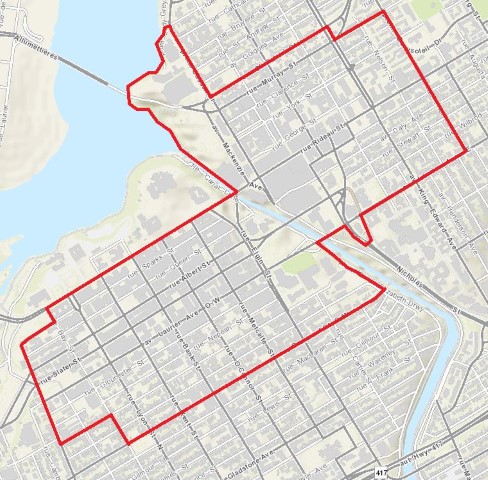
The claim, for which the next hearing is scheduled March 30, recounts how hundreds of trucks, backed by thousands of protesters, tortured residents with extreme noise and noxious fumes and how many businesses had to close or curtail operations on blockaded streets in Centretown, Lowertown and around Parliament.
A newly wed, Devaney was also embarrassed by the situation. He had excitedly promised his American spouse Mikayla that Canada was a great place to live, that like him she would love winter. Instead, his income plunged. That was on top of earnings lost during the COVID lockdown that ended just as the convoy took over downtown.
Like many others accustomed to protests in the Parliamentary Precinct, Devaney figured the protest would last one weekend at most, starting Friday Jan. 28. Instead, on Monday it took him an extra half hour to get into work and “the massive noise” of air horns and train horns seeped through the old stone walls of the restaurant, discouraging customers. “It was the same story day after day,” he said in an interview.
While he has a teaching degree for the future, Devaney has worked for a decade in restaurants and his occupation as a server “gives me joy.” He doesn’t name the restaurant to spare his employer a nasty online backlash some other businesses were subjected to after speaking against the convoy.
Devaney represents employees in the lawsuit. Zexi Li represents residents. She is a 21-year-old Centretown resident and public servant who won an injunction in court to reduce long hours of honking. The Happy Goat coffee company and Union: Local 613 restaurant represent businesses in the suit.
The lawsuit seeks $36 million for pain, suffering and psychological distress from private and public nuisance; $200 million for business losses; $60 million for lost wages; and $10 million in punitive damages.

Lawyer Paul Champ told the Echo he estimates that the ByWard Market part of the business and employee losses in the claim are about 25 per cent. The zone affected by the truckers includes the entire ByWard Market and part of Lowertown.
“As for residents, my best estimate is that there are around 2,500 people in the affected Lowertown area,” Champ said in an email. “Going by our current legal and factual analysis for potential damages for 20 days of occupation, that likely means around $10,000 in damages for Lowertown residents.”
The suit specifies the dangers to health from extremely loud air horns and train horns 12-16 hours a day and from noxious fumes of 300-500 trucks idling 24 hours per day in a congested area.
“For the approximately 12,000 residents who live closest to the protests, the non-stop blaring horns have caused unbearable torment in the sanctity of their own homes,” the claim says. “Combined with the diesel fumes, unexpected fireworks, and loud sound systems blasting music, the Freedom Convoy occupation has made downtown Ottawa a living hell for residents.”
The blocked roads, diesel fumes, and blaring horns had deterred customers and made it difficult if not impossible for many to stay open. Many employees were laid off or had shifts cancelled. Devaney’s usual six shifts were reduced to one or two per week. The worst income loss was Valentine’s Day, one of the biggest days of the year for restaurants.
Devaney said he is not resentful because he believes the convoy protesters are being misled. Still, “there needs to be accountability” and he wants to be part of making that happen. As for COVID19 vaccinations, one of the health measures the truckers were protesting, Devaney is confident “we can trust the science.”
At press time, public donations to finance the court case tallied around $80,000, with almost all of that allocated for private investigators and experts, Champ said.
“We are finalizing our agreement with the representative plaintiffs in the near future and will have more to say about our plans for fundraising in the near future, and where the money will go.”
Meanwhile the federal government opened a portal March 15 for applications for grants of up to $10,000 for businesses with fewer than 100 employees in the downtown area who were affected by the convoy.
Funds from this Downtown Ottawa Business Relief Fund are meant to cover wages, loss of inventory, utilities and other extraordinary expenses related to the repair or protection of a business due to the demonstrations. Some grants will be topped up by $5,000 by the Ontario government.
City Council passed a set of motions to assist recovery as well. They include a proposed property-tax deferral for business and restaurants; $50,000 to the ByWard Market Business Improvement Association and $25,000 to the Ottawa Markets Corporation. Another $50,000 was approved for the Ottawa Music Industry Coalition to support recovery with performances.