
Part 1: 541-545 Rideau Street (former home of the Culinary Conspiracy)
By Ilona Horvath
Do you want to know who will be the occupants of the new residential building in our neighbourhood, and how these buildings may reshape Rideau Street?
This is Part 1 of a series of articles in the Echo to provide you with first-hand information from the developers, with particulars about the new buildings and their impacts on the streetscape as well as the new businesses and services which will emerge as part of these new developments. So let’s zoom in!
We start our journey on Upper Rideau Street. To begin with, Uptown Rideau Street was designated as Traditional Mainstreet in the Official Plan and has been a target area for intensification. It is an important corridor which separates Lowertown and Sandy Hill and has an important function of handling public transport and traffic between Vanier and the heart of the city.
According to the January 2016 Plan,
The Uptown Rideau Community Design Plan (CDP) and the Secondary Plan provide an updated vision for the area and set out policies on matters related to land use, built form, and public realm to guide and manage the anticipated growth and change.
Uptown Rideau Street is a vibrant downtown mainstreet and an entryway to the City’s Central Area and Parliament Hill. It is a gathering place between two established and diverse neighbourhoods – Lowertown and Sandy Hill — and a safe and inviting place for people of all ages to live, shop, work and relax. It is generally a street of mid-rise buildings with continuous active storefronts, shops, restaurants, and cafés at the street level and places for people to live and work above. Occasionally, taller buildings rise above human-scaled podiums, transitioning in height towards the Central Area and adding visual interest to the skyline.
The buildings that line the street are a mix of heritage and new buildings, the latter achieving sensitivity to established neighbourhoods, strong contributions to the pedestrian realm, and a high-level of architectural excellence befitting of a premiere street in the National Capital. The public realm of Uptown Rideau Street prioritizes pedestrians, cyclists and transit users over motorists.
A network of pedestrian and cyclist connections and crossings make it a safe and comfortable place to move through and small, accessible, urban open spaces encourage people to stay a while, relax, and observe all the street has to offer. (Source: Uptown Rideau Street Secondary Plan, January 2016)
Members of the Sandy Hill and Lowertown communities worked countless hours over more than two years during the consultation process with the City that preceded the adoption of these plans. What has come to fruition so far and what can we anticipate in the years to come?
Our survey begins with an all-glass, 9-storey building at the 545 Rideau at the corner of Cobourg Street, which is nearing completion. https://545rideau.com
For over a century a larger red-brick house stood on this lot, which many neighbourhood residents still recognize by the name “Culinary Conspiracy”, a residential building which was owned by a catering company and had a small café with a smaller takeout selection. This building underwent significant structural changes during its long and rich history. Over the years, it has housed early pioneers, civil servants, artists, wartime veterans and entrepreneurs.
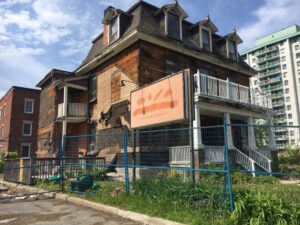
In an effort to protect it from demolition, the Lowertown Community Association had requested official heritage designation for the building. This was an important step which led to the building being included in the Uptown Rideau CDP.
In 2017, Gaetan Chenier, Principal of the Chenier Group, emerged as a serious partner who initiated a meaningful and constructive public-consultation process with the Lowertown and Sandy Hill communities. At the outset, the idea was to integrate part of the heritage structure into the new development. The plans went through major alterations and eventually the decision was made to restore, reuse and relocate part of the building materials next to the new building on Cobourg Street.
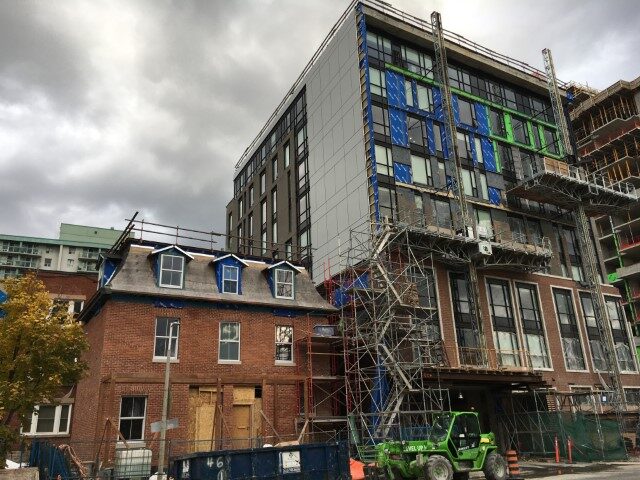
As Mr. Chenier told me in a recent interview, demolition of the building and work on the foundation started in 2019. Today, the construction inside is almost complete. As of November 1, 80 per cent of the 114 units have been leased. The west wall is still under construction, which is causing some delays, but all units will be available by the end of this year.
While COVID may have contributed to some delays in the construction work, on the other hand it accelerated the online lease-management process. The leasing part of the Chenier Group has used their website for booking tours online and organized personal virtual visits via Zoom. This is new feature in the rental business which will likely continue in the future.
Mr. Chenier is very pleased with the final product and so are the tenants. Most of them are young professionals, but there are also students attending the University of Ottawa. Their goal wasn’t for 545 Rideau to become a student residence so there is a good mix of tenants, with some people moving in from other provinces to take up new jobs in the capital.
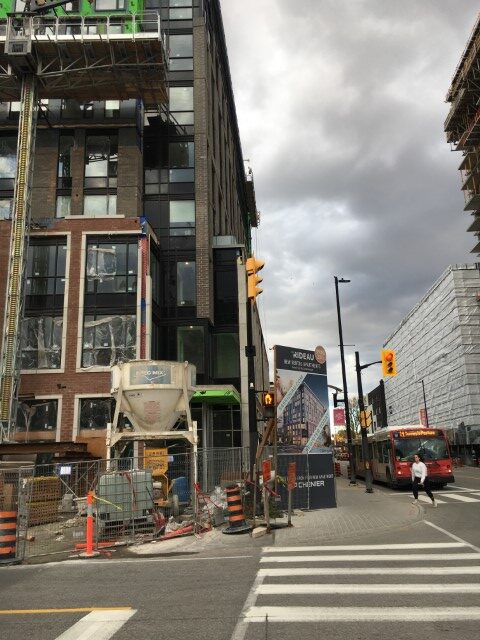
The building conforms to the Leadership in Energy and Environmental Design (LEEDS) standards, one of the main international green building standards with more than 94,000 projects across 165 countries. Units are modern, and well equipped: six appliances, including washer-dryer and dishwasher, are installed in every unit.
Tenants are fully responsible for their own use of water and energy but they have also full control. Each unit has a heat pump, so tenants can regulate the temperature in their unit. Consumption is metered so tenants only pay only for their own consumption. This system encourages rational consumption and thus helps conserve energy and water, a feature welcomed feature all!
There is an underground garage with 50 parking spots. Vehicles can enter and exit on Cobourg Street only, and no major impacts are anticipated on Rideau Street. Parking is an extra cost and many tenants chose not to have a car.
The building will house a pharmacy and a walk-in clinic on the ground floor, occupying over 2300 square feet. They are expected to open to the public in early 2022.
Mr. Chenier told me that they received very positive evaluations from the tenants thus far. They are very satisfied with all the amenities–there’s a gymnasium, and two common rooms–, but the parcel room, which is fully controlled electronically, received the most accolades.
The neighbourhood is not only pleased that the Chenier Group respected the height limits of the Uptown Rideau CDP but also because they did their utmost to preserve the heritage building which was rebuilt as a duplex while retaining its significant heritage attributes and architectural features. However, there have been challenges along to way to attain this goal, among them the limited space available for the duplex on Cobourg Street. The constructions costs of this building have been higher than planned Mr. Chenier said he did not want to make a compromise. The duplex has been built with the original bricks of the heritage building and it meets all commercial standards. It will be available for rental in December, but some fine details of the building front will be only completed next spring.
I share the views of other community members: the final product is great, with lots of glass, and with brick resembling the style and colours of some of the neighbouring buildings. The new building is an appealing addition to this section of Uptown Rideau Street which reflects the scale of Rideau Street and will make a positive contribution to the community.
There were seven consultations with the Lowertown community at the invitation of the Chenier Group. The willingness to listen to the concerns and suggestions from the community serves as a model for public consultation in the planning and development process. Thank you Mr. Chenier!