
By Alison Hobbs
This summer, Ottawa citizens are appreciating the nearby green spaces again, as well as taking a renewed interest in gardening. This growing trend is a good thing, because cities play an important role in the conservation of ecosystems crucial to the planet’s survival. How can we champion biodiversity in and around Lowertown?
Our food supply depends on the survival of pollinators. The goal of the David Suzuki Foundation’s Butterflyway Project is to create a thousand pollinator gardens across Canada, reusing old canoes as planters for native species. In fact, any large container serves the purpose; so long as it has drainage holes, you just add potting soil and plants. If neighbours organize curbside plant exchanges, no one needs to search far or spend a great deal of money. Established perennials need dividing and transplanting, so why not share your excess? Pollinator gardens require minimal maintenance.
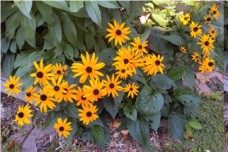
For an eco-friendly flowerbed, imagine a variety of shapes and colours. Group a few clumps, preferably in threes, of evening primroses, lupins, beebalm, coneflowers (echinacea and / or rudbeckia), asters, and see what creatures begin to visit your garden. Milkweed flowers help monarch butterflies to survive. Lavender and sedum, although not native species, also attract the bees and butterflies. Select your plants with care, each kind blooming in turn, and you’ll have flowers all summer long. Look for the City of Ottawa’s web page about pollinator gardens. The flowerbed outside City Hall features locally-sourced native plants and includes an “hotel” for native bees, complementing City Hall’s community vegetable and herb garden. If you would like a bee hotel of your own, the City offers online DIY instructions.
Building a rain garden allows summer downpours to be absorbed slowly into the ground. This not only helps divert a flood from your home, but also prevents too much run-off into storm drains, thus keeping our local waterways clean: another plus for biodiversity in a region where some 60 species are at risk of extinction. In partnership with Ecology Ottawa, a worthwhile way to monitor the progress of wild plants and creatures in our midst is to install the iNaturalist app on a smartphone and have your family take part in a citizen-science Bioblitz.
Ecology Ottawa imagines Ottawa “integrated with nature rather than pushing its biodiversity to the sidelines”, but the aim of “rewilding” the city doesn’t have to mean letting our yards become overgrown. There are ways in which we can find a balance: we could let leaf-litter remain on our lawns and soil in early spring, so that small creatures are not disturbed, except perhaps by birds foraging for food. For animals and birds to drink or bathe, a focal point in your garden can be as simple as a flat-bottomed receptacle with stones in it, filled with water. Position this where it can be seen from your house and it will provide hours of entertainment. Marbles covered with water in a shallow dish allow butterflies and bees to drink without drowning.
Each year, Ecology Ottawa organizes a native tree giveaway, and this year’s is the most ambitious yet, with 15,000 saplings available. Starting in June, coniferous trees are being distributed first, and fruit shrubs later in the summer. The new Farmer’s Market on York Street in the ByWard Market is another great source of specimens for planting.