
By Curtis Wolfe
Tracing the life and accomplishments of Louis-Adolphe Olivier reveals a story marked by perseverance and dedication that was tragically cut short. His role as the first Francophone judge appointed in Ontario as well as his contributions as a lawyer and engaged community member not only attest to his individual achievements. They also highlight the impact and depth of character found among the historic residents of 19th-century Lowertown.
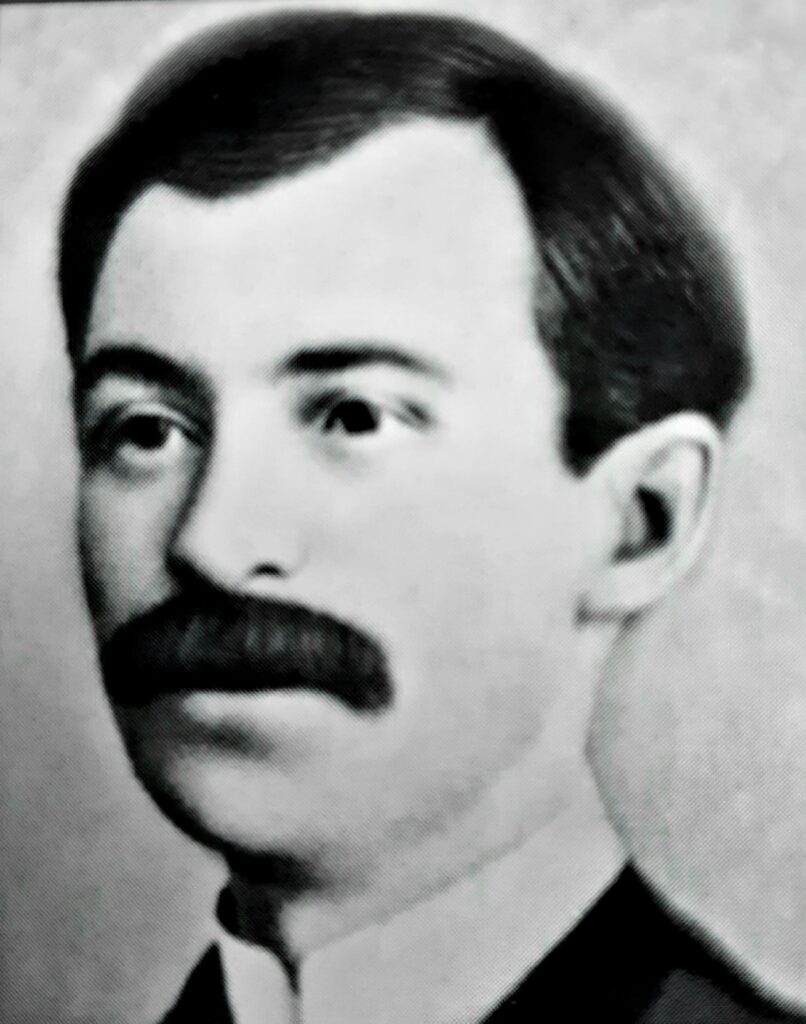
In 1850, Louis-Adolphe, the youngest of seven siblings, was born in Saint-Joseph (Maskinongé), Canada East (now Québec), to parents Elie Olivier and Émérantienne (also known as Émérance and Amarande) before moving to Gloucester Township the following year. This period of Louis-Adolphe’s life was cut short when his father, Elie, died in 1860, leaving behind his wife and a young family.
In 1875, one of Louis-Adolphe’s brothers, also named Elie, bought and likely arranged construction of 95-97 St Andrew Street. Louis-Adolphe lived at this address for several years, along with other adult family members, including Ottawa Ward Alderman, J.L. (Joseph Lactance) Olivier.
During this time, Louis-Adolphe was able to pursue an advanced education. This is notable and quite remarkable for two reasons: he could not rely on the financial support that his father would have provided, and this was a time when French Canadians in Ontario faced discrimination and pressure to conform to English-Canadian society.
Louis-Adolphe completed an education in classics at the bilingual Ottawa College (now the University of Ottawa) and pursued his legal studies at Osgoode Hall in Toronto. Following an apprenticeship with law firms locally and in Toronto, he successfully completed the requirements to be called to the Bar in 1879, obtaining full administrative requirements to work as a lawyer.
Locally, he started work with Georges Taillon, among the few French-speaking lawyers in the city, at Mosgrove & Taillon and at Georges Taillon and Associates. Throughout the 1880s, he maintained a law office at 569 Sussex Drive near Rideau Street, now demolished. He litigated a wide range of cases, including domestic disputes, liability from a sidewalk fall, estate auction sales and a more complicated insurance case that went to the Supreme Court.
Louis-Adolphe was active in his community in several ways. He was elected as an Ottawa city alderman in 1882. He was involved in the Société Saint-Jean-Baptiste and the Institut canadien-français d’Ottawa, and he was onetime president and an active and loyal member for ten years of the Ottawa local Liberal-Conservative Party, the party of Prime Minister, John A. Macdonald.
In 1888, he became the first French-speaking judge in Ontario when he was appointed to the L’Orignal Courthouse in the United Counties of Prescott and Russell. The same year he became a judge, he was awarded the Ottawa College’s first honorary doctorate in recognition of his appointment.
A reporter in Cumberland noted the judge treated his first official business in a dignified and patient manner. The local English population was lukewarm to the appointment of a Francophone judge: they “sighed at the notable changes in languages.” Apparently, there was a feeling that the English community “was on the wane, if not quite passed away, never perhaps to return.”
Whatever these exaggerated language concerns were, they did not endure with Judge Olivier specifically. Regrettably, his tenure in L’Orignal ended abruptly as he passed away one year later after giving a speech as president of the university alumni association.
Just like his own father, he left behind his wife Edouardina Rivard, whom he had married in 1883 in Joliette, Quebec, and their five young children.