
Par / By Michel Rossignol
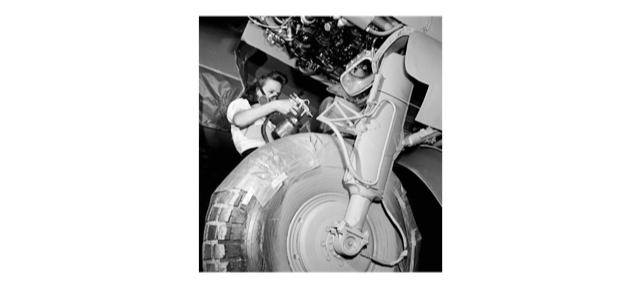
Au début des années 1960. un de mes amis et ses parents, des voisins de la rue St Patrick. m’ont invité à visiter avec eux le nouveau bâtiment (à cette époque) à l’aérogare de l’aéroport d’Ottawa. Dans le petit musée au deuxième étage, la mère de mon ami a identifié sans hésitation le bombardier britannique de Havilland Mosquito sur de nombreuses photos. Je ne pouvais pas cacher le fait que j’étais très surpris qu’elle connaissait tant de choses au sujet de cet avion. Elle m’a gentiment expliqué que pendant la Deuxième Guerre mondiale, elle et ses parents demeuraient à Toronto tout près de l’usine de la compagnie de Havilland Canada où se trouvait la ligne d’assemblage canadienne des bombardiers Mosquito construits pour les forces aériennes du Canada, du Royaume-Uni et des États-Unis. Vers 1944 lorsqu’elle avait seize ans, elle a commencé à travailler sur la ligne d’assemblage des bombardiers Mosquito avec sa mère, une employée de de Havilland pendant presque toute la durée de la guerre. Comme Madame Cormier et sa mère, plusieurs femmes ont travaillé dans les usines en temps de guerre à travers le Canada, souvent avec des substances toxiques, pour fabriquer l’équipement nécessaire pour soutenir l’effort de guerre allié.
Soixante ans plus tard, j’ai pensé à toutes les choses que j’ai appris cette journée-là alors que je lisais un livre, Spreading My Wings, l’autobiographie de Diana Walker (née Barnato). Diana fut l’une des femmes pilotes pendant la Deuxième Guerre mondiale d’une organisation britannique avec des pilotes civils, la Air Transport Auxilliary (ATA). Les pilotes de l’ATA, hommes et femmes, livraient les avions comme les bombardiers Mosquito et les célèbres avions de chasse Spitfire aux unités militaires au Royaume-Uni. (Des pilotes du RAF Ferry Command faisaient les longs vols périlleux pour livrer les avions du Canada au Royaume-Uni.) Helen Marcelle Bristol (née Harrison) fut la première des quatre Canadiennes qui étaient des pilotes de l’ATA. Les pilotes de l’ATA n’ont pas participé aux opérations de combat, mais c’était quand même un travail dangereux à cause des intempéries et les bris mécaniques. Malgré tout, les pilotes ont livré des centaines d’avions.
Après la guerre, il y avait de nouveau des préjugés envers les femmes en aviation, mais ceci n’a pas empêché les femmes qui avaient été des pilotes de l’ATA de tirer leur épingle du jeu. En 1963, Diana Walker (née Barnato) fut la première femme britannique à franchir le mur du son et elle fut une des premières femmes au monde à piloter un avion supersonique. En 1961, Marion Orr (née Powell), une des quatre Canadiennes de l’ATA, fut entre autres choses, la première Canadienne à devenir pilote d’hélicoptère. Vera Dowling (née Strodl) est arrivée au Canada dans les années 1950 et elle fut la première instructrice de vol dans la Province d’Alberta. Grâce au courage et à la détermination de ces pionnières et d’autres, des femmes pilotent aujourd’hui tous les types d’avions.
In the early 1960s, one of my friends and his parents, neighbours on St. Patrick Street, invited me to go with them to visit the then new terminal building at Ottawa’s airport. In the small museum on the second floor, my friend’s mother correctly identified photos of a British bomber, the de Havilland Mosquito. I admitted to her that I was very surprised that she knew so much about this airplane. She graciously explained that during the Second World War, she and her parents lived in Toronto next door to the de Havilland Canada factory, where many Mosquito bombers were built for the American, British, and Canadian air forces. Around 1944, when she was sixteen years old, my friend’s mother started working on the Mosquito production line alongside her mother, a de Havilland employee for most of the war. Mrs. Cormier and her mother were two of the numerous women who worked in wartime factories across Canada, learning new skills but sometimes dealing with hazardous materials to make equipment for the Allied war effort.
Sixty years later, I remembered that day while reading the book Spreading My Wings, the autobiography of Diana (Barnato) Walker. [Maiden names are within brackets.] Diana was one of the female pilots of a British wartime civilian organization, the Air Transport Auxiliary (ATA). The ATA pilots, men and women from the United Kingdom and many other countries, delivered aircraft like Mosquito bombers and the famous Spitfire fighter aircraft to military units in the British Isles. (Pilots of Ferry Command made most of the long and risky delivery flights from Canada to the United Kingdom.) Helen Marcelle (Harrison) Bristol was the first of four Canadian women to join the ATA. ATA pilots did not participate in combat operations, but they had to deal with the dangers posed by bad weather and mechanical failures while delivering hundreds of aircraft.
After the war, female ATA pilots still had to contend with outdated attitudes towards women in aviation, but that did not stop them. In 1963, Diana (Barnato) Walker became the first British woman to break the sound barrier and one of the first women in the world to fly supersonic jets. Marion (Powell) Orr, one of the four Canadian women who joined the ATA, was, among other things, the first woman in Canada to become a helicopter pilot. Vera (Strodl) Dowling moved to Canada in the 1950s and became the first female flight instructor in the province of Alberta. Today, women fly all types of aircraft thanks to the courage and determination of these and other pioneers.